Monday, May 22, 2006

Is Jean Hyppolite the finest reader of philosophy?

I have smudged my way through a few weeks of busy-ness. Hence the dearth of posts. Hyppolite has been there by my side every step of the way (ok, except for that niggling Epistemology and Metaphysics exam).

What a legend. Elusive-Hyphen calls Hyppolite's essay on memory "the best", and Hegel scholars the world over turn to his books for guidance in those darkest of arts - Hegelianism.

Friday, May 12, 2006

Luce Irigaray part two: "Keep your difference!"

Luce Irigaray exhorted us to keep our difference - this remark signalled that the seminar was beginning to open up. It had begun badly, with one participant reduced to tears through an unfortunate sequence of misunderstandings and miscommunications. This failed dialogue was followed by a disagreement over whether Allah is neuter. "Prove it!" demanded Irigaray playfully.

There were one or two blogworthy diamonds in the dust of seminar waffle (sorry, 'valuable discussion'): "...it is fashionable to reject Heidegger today..."; and in response to a question about another academic, "I am not here to judge anyone".

I asked a question at the end of the seminar: "Does a deeper commonality, or common humanity animate our progress towards the other? I would like you to elaborate whether there must be a more fundamental sameness, beneath the difference of which you speak." I thought it was a suitable question for someone of my standing: not too specific or knowledgeable - the kind of question expected of a person familiar with philosophical problems, but not an expert on Irigaray's work.
The response was interesting: humans are relational, but they relate in different ways. Each person inhabits their own 'house of language', so the problem is how to articulate a way to meet in a common region. She also made one or two crucial remarks about mourning - which I didn't fully understand.

Later, there was another dinner for the seminar participants. Funnily, we arrived at our table just as the Frédéric Worms party was arriving at theirs' (luckily, I managed to catch most of Worms' talk earlier that day). The evening took on a dreamlike quality. In the distance I could see mortal enemies Elusive-Hyphen and Dave Distiller conversing with vigour and apparent pleasure, in the company of the eminent Bergson scholar.

As we (the Irigaray group) threw ourselves heartily into our second day's drinking, the discussion livened up considerably. Someone asked Irigaray a question about Sartre.
"Sartre! Sartre! When they offer me the Prix Nobel, only then will I talk about Sartre!"

At the end, there were only five: four philosophy students and the guest of honour. She was regaling us with stories of the Italian school children with whom she works. She showed us some drawings, and explained their importance.
Since most of our group had left, it appeared that I was the only person remaining with any knowledge of french (I use 'knowledge' in its loosest sense). Fargone asked Irigaray a question about whether the bambini 'keep their difference'. She couldn't understand the English. She gestured at me: "You seem to have some French - can you translate?" I tried. Let's just say that we built a small tree-house of language, between French and English. Irigaray understood my rendition of the question, although in my excitement I made a grammatical blunder (or two).

The end of the evening was marvellous - there was a collective sense of joy. Whoever said in vino, veritas was mistaken. One finds not truth in wine, but love. Just as we reached the bus stop, where some of us were to separate, Irigaray began to tell a story about an interview. We started to say our goodbyes, and she said with mock incredulity "don't you want to hear my story?"
"I imagined for the interviewer a dialogue between the masculine identity of Beauvoir and the feminine identity of Deleuze!"
Everyone started falling around in raucous laughter. And then she was gone.

Luce Irigaray part one

On Tuesday, Professeur(?) Irigaray gave a talk ('The path towards the other') at our university, which was followed by wine and dinner with her and the English department. I was fortunate enough to be invited.
Near the end of the evening, I infiltrated a small group of people talking to Irigaray. She asked me what I did at the university. I told her of my status, adding that I really enjoyed her lecture. Not satisfied with this formulaic response, she said: "Oh yeah? What part of the talk did you like?" The other people at the table erupted into comical derision: "You got rumbled...Tough break kid."
Fortified by the wine I'd been drinking all evening, I waved them away: "No no no, I will answer the question." I proceeded to say something about authentic communication with the other - which I now realise she couldn't really understand, since in my ardour I talked too fast.

A little later, she turned to quiz the (analytic) philosopher of literature sitting beside me. It was, erm, tricky: "I am interested in the knowledge we can gain from fiction...Woolf...ethics" the hapless anglo-americano mumbled.

After the main course, Irigaray managed to snaffle two desserts from the set menu. I heard our waitress being gently admonished by her supervisor - but her explanation for the freebie was simple: "Gift of the gab, innit."

Wednesday, May 10, 2006

Monday, Tuesday, Opus Dei...


Always nice to have a Labour Minister for Women and Equality who thinks homosexuality is a sin, and that condoms promote promiscuity. I won't even mention whether she is pro-life or pro-choice. At least we can feel comfortable in the knowledge that the Catholic Church has the interests of the proletariat at heart. Like when they tried to spread the rumour - amongst poor and Aids stricken communities - that condoms have tiny holes through which HIV can pass.

Monday, May 08, 2006

Sign in a toilet near the philosophy department

To prevent blockages, please do not deposit cigarettes in the urinal.

Mmkay

A game of chess is like a sword fight: think first, before you move

"Reading philosophy sometimes stimulates, even cures. Reading sends us back to our daily existence with our spirit a little more alive. A chess match would have perhaps done just as well, and would have created less mental perversity and illusion."
Luce Irigaray, The Way of Love p4.

Thursday, May 04, 2006

Five minutes is a long time in philosophy

Brn has arrived back from France. We talked of Bergson.

"Oh, yeah, thanks for recommending that Deleuze book - it was excellent," a whippersnapping second-year piped as he tumbled past the door of the room Brn and I occupied. At last, I am a guru. The lad's cheeks reddened; he was trying to suppress the lust that he couldn't understand.

Later, I turned to look out the window, as Brn reminisced about the cafés. A student walked past, and adjusted her skirt with a tug. I wouldn't notice this but for the fact that a moment later, another girl strolled by, doing the exact same thing. Tugging the skirt straight.

The earth moved

Tuesday, May 02, 2006

'This is it, my niggaz: this what we boast about'


I have submitted my Bergson/Merlot-Ponty car crash. All's well that ends well, as they say in the tropics.

Wednesday, April 26, 2006

Democracy in full bloom

On my stroll to the bakery, I spotted a Labour leafleteer. A bleak job, if ever there was one. Moments after he dropped his message of doom (sorry, 'appeal for votes') through their letter-boxes, two neighbours both erupted out of their front doors into the street. "I've had enough of these fucking pamphlets!" one rasped, hurling the red and yellow scrap of paper into the street and under my eagerly trampling shoes. With less community spirit, and more of the 'good neighbourliness' of apartheid South Africa, the women gave each other a look of disgust, then retreated back into their homes.

On the way back (my bag bulging with tasty treats) I noticed the leafleteer talking to one of the women. How he snaffled this interview, I have no idea. "So even you admit it - there were some good things happening under Labour" he said, er, labouring a point. His robust interlocutor gave a gesture of such disdain, I almost lost my footing.

Could someone remind me what elections are for? Nowadays most people vote for parties that hover around what used to be called the centre-right. And when, in the unusual case that a party or person of any distinction gets votes, such as the BNP, Hamas, Le Pen or Ahmadinejad, everyone starts howling.

Possibly dogmat's most foolish escapade

I was lounging in front of the computer, poring over Bergson's Mutter and Murmuring, when I recalled a galling incident (much like a boating incident, with less water). Towards the end of high school, I did some work for a small cycling magazine. One issue was especially poorly organized, and I was roped in to help with the layout - the headlines, in particular.
Flicking through the magazine after publishing, to check on everything, a centimetre-high caption caught my eye: "The Three Muscateers"
I assure you, "The Three Aromatic Grape Men" is not what I intended to call them (nor "The Three Omanis", in case you were wondering). Oh, the shame!

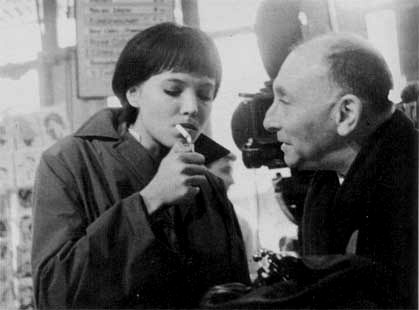
Vivre sa vie

Monday, April 24, 2006

European thought comes to Coventry

There's good news and there's bad news.
The good news is that we've got Luce Irigaray and Frédéric Worms coming to give lectures here this term.
The bad news is that we've booked them both at the same time, on the same day.
What in the blazes!?

Thursday, April 20, 2006

Mylittle-Pony

Is this the dogmat we all know and love?

Cynosarges - first home of the Cynics:
"They rejected the social values of their time, often flouting conventions in shocking ways to prove their point. They challenged their listeners to get in touch with their 'natural' animal side [...] disrepute and poverty are advantageous in so far as they drive back the man upon himself, increasing his self-control and purifying his intellect from the dross of the external. The good man (i.e. the wise man) wants nothing: like the gods, he is self-sufficing; 'let men gain wisdom—or buy a rope'; he is a citizen of the world, not of a particular country [...] The very essence of their philosophy was the negation of the graces of social courtesy; it was impossible to 'return to nature' in the midst of a society clothed in the accumulated artificiality of evolved convention without shocking the ingrained sensibilities of its members." (Wikipedia)

Tuesday, April 18, 2006

Police detectives


I hate to love them. Watching Twin Peaks this weekend has reminded me of the very special feelings I have for certain sorts of policemen. Those men and women in the pages of books or on the tv screen, who embody a certain quiet seriousness, who are regular to the point of metronomy. It always comes down to rhythm, doesn't it? Inspecteur Maigret and his little habits, the subtle charm of reliability. Lieutenant Columbo, shuffling around in the same old coat, driving the same old car, tiredly berating the same old naughty dog. "My wife loves murder mysteries..." he repeats. "Oh, one more question sir..."
Maigret and Columbo, so often investigating those wealthy, dissolute folk whose very lack of regularity is their downfall. The calmness which grows out of the cultivation of habits would have made murder impossible. Instead those unfortunate souls drift from tennis games to cocktail parties without realizing their weariness is in the soul, not the body.

What better to express the rhythm of a person than their eating habits. Agent Cooper with his pie and coffee, the Twin Peaks police station with their nightly doughnut smörgåsbord. Foucault was right: the soul is the prison of the body. With the precise mind which befits a bizarre FBI operative, the body cannot but fall into line. Doughnuts, pie: it is not a question of hunger - they'll get eaten one way or the other, because the desire does not emanate from the stomach.

Sunday, April 16, 2006

Sartre and Merleau-Ponty

De Beauvoir: You were very standoffish with people you didn't like. Merleau-Ponty, for example. You were on very bad terms with him, weren't you?
Sartre: Yes, but even so I once protected him from some men who wanted to beat him up.
De Beauvoir: You were singing obscene songs, and being pious he tried to stop you?
Sartre: He went out. Some fellows ran after him - there were two of them - and they were going to beat him up because they were furious. So I went out too. I had a sort of liking for Merleau-Ponty. There was someone else with me. We overtook them and said, 'Come on. Don't beat him up. Leave him alone and let him go.' So they didn't do anything; they went off.
bbbbbbbbbbbbbbbbbbbbbbbbbbbbbbbbbSimone De Beauvoir, Adieu: A Farewell to Sartre p256

In the news

Are these people insane? Cutting off Palestinian Authority funding cos no-one likes the cut of their jib. Very mature. Of course we may not have to face the consequences of this foolishness if Iran steps in to 'resolve' the situation. With their nukes (I'm not obsessed - I promise).

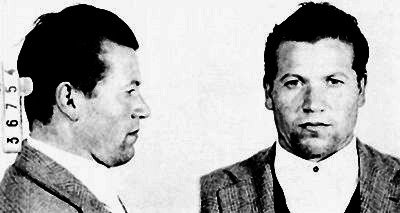
My attention was also drawn to this article, in yesterday's paper, about the fugitive Mafia boss and the love-letters he sent to his wife. How fascinating: this is what newspapers should be all about.

Work

I am writing this in a state of joyous agitation. I have made a breakthrough in the Bergson/Merleau-Ponty project (you know the drill: 'if I told you I'd have to kill you'). The moment when it all comes together. They say it has similar physiological characteristics to an orgasm. Or is that sneezing - I can never remember. I know for sure it is just as good as that first sip of espresso. I wouldn't know about an orgasm anyway, cos, well...(Hi mom. Hi dad. Glad you're reading!) That's a joke, in case anyone's wondering (Hi mom. Hi dad.). I have to make that clear, since there has been some suggestion in the comments that I'm a mormon. Is it the Bataille? Or maybe just a spelling error...

Tuesday, April 11, 2006

Tuesday love

g
On the eve of an Iranian nuclear strike on the very fabric of civilization itself, newsreaders across the world capture the mood: 'It's WAR!'

The last few days

Unisex Middleversity: where 'ethnic minority' doesn't mean Chinese students paying top-yuan for the privilege. I took a trip to London last week, passing by the campus to see some of the Dictionary of Unrepentant Terms seminar. I had terrible hayfever throughout, but was cheered somewhat by the lightheartedness of proceedings. Prof De Libera, in particular, contributed to the jocularity with odd remarks - at one point he called Prof Balibar méchant, which means 'naughty' or 'wretched'. Sadly, that comment fell on unappreciative ears.

I was there for the two talks on subjectivity. I shan't try (and inevitably fail) to summarise them here. Interestingly, Balibar was to supervise the dictionary entries concerning politics, but instead requested the opportunity to write about 'the subject', because, as he said, "I don't know much about this." It was remarkable: he is not exactly a young philosopher casting around for an area of expertise - it seems he just wanted to work on something more original than is expected of 'someone who once collaborated with Althusser'. His career was made long ago, but he wants more. What a radical notion! We might even import it over here one day (but don't bet on it).
I became increasingly amused every time Balibar mentioned "philosophy of mind", or "Davidson" or "possible worlds" (ok, that was in relation to Leibniz, but still) or when he cried out for "a comparative study of Deleuze's Logic of Sense and analytic accounts of action"... (That's enough Conference Report. Ed.)

My eyes are aching. I'm stuck in the arm-pit of Phenomenology of Perception, where Merleau-Ponty is talking about monocular and binocular vision. Naturally, when he refers to the research findings, it is necessary for me to repeat the experiment myself (this involves much squinting of the eyes, and changing focus). One experiment which I did had a quite remarkable result: stand about two yards from a plain white wall looking straight at it, and, with an outstretched arm, raise your index finger to just below your line of sight, maintaining focus on the wall. Once you can see 'in the corner of your eye', the index finger unclear and double, turn your focus to the finger completely. Not only will the finger appear to 'flesh out' or 'materialize' as it comes into focus, but you will notice that the finger actually feels like it has transformed from a phantasm into a thing. I'm almost blind from doing this over and over again.

Speaking of Merleau-Ponty, I saw Lila in London too. I am convinced she could be the next Schneider (the World War I casualty who took the 'thought' out of 'thought experiment'). After a short stop at the neurologist we walked around Camden telling each other slanderous stories about fellow students and teachers. Jolly good.

ps. Here is Zizek's diagnosis of the 'liberal communist'.

Tuesday, April 04, 2006

Feel the magic, hear the roar: Thundercats are loose!


On the left, logo for marvellous 80's cartoon Thundercats. On the right, the emblem for crime-fighters Serious Organised Crime Agency. Miaow.
To find out how to turn your criminal friends over to the law, click here (but remember - snitches are not long for this world).

Tuesday love

Today, I would like to sing the praises of the engineering department. They happen to take their coffee in Raffles, so I get lots of opportunities to 'accidentally overhear' the stuff they talk about.
There is one professor who repeatedly expresses his concern about lazy teachers and generous marking. He has high expectations of students, an unusual trait for lecturers these days (and something which, as a student, I find very encouraging).
On another occasion, I heard a lecturer calling for there to be no difference in pay between secretaries and professors. That is probably the most revolutionary thing I have heard come out of anyone's mouth for a long while.

Friday, March 31, 2006

Madness and incivility

I've been reading about Foucault, and I've taken some concrete steps (it's a mafia thing, mixing metaphors and all. You sleep with the fishes someday dogmat...). On the political front, he had Groupe d'information sur les Prisons. Following the great man, I have started wearing my activist Save Arrested Development teeshirt. Never mind that I watched the show downloaded off the internet for free, and that it has already been cancelled. 'Revolution o muerte' whatever the weather. Concerning technologies of the self, I have been teaching myself to throw with the left arm (which would be good since I am actually left-handed). For some reason right just felt right.

Now I know what you're thinking: "someone showed him that funny bit in Zizek's Orgasms without Bodies about the yuppies reading Guattari and Deleuze."
All I have to say is: we don't call them 'yuppies' anymore - it's now 'pinstriped cnuts', or simply 'the gainfully employed'.

Thursday, March 30, 2006

Those conspiracy theories...

Come on. There I was, trying to defend ole Uncle Sam, and then the big fool goes and pulls a stunt like this. Yes, stun belts in court. Three cheers for justice.

Tuesday, March 28, 2006

Tuesday love


I've hit the mother lode. Have you?

Monday, March 27, 2006

France. Another crack.

I think there is some confusion concerning my attitude towards the revolting French students. If you are a regular reader, you will probably know that I support violent protest by default (particularly if it 'turns nasty').
All I wanted to do was point out that some manifestations of resistance are less significant than others. We all remember the mother featured in Fahrenheit 911 grieving her dead soldier son. We can also recognize that this sort of thing has the potential to change attitudes in a country like the United States. But in the end, we snort with derision at people who all-of-a-sudden turn pacifist coincidentally at the same time as they lose a loved-one at war. Magically Tony Blair and George Bush become liars when Private Johnny gets blown to pieces in a ditch somewhere in terrorist-land.

And so with the students. Not a peep from them in November (even Socialist Worker struggled to find evidence of this). Then: oops, laws concerning their immediate financial future get changed and suddenly it's 'solidarité!'

I still support them. I still dislike 'reform' or 'modernization' (ie. becoming more American). Nonetheless - and perhaps it is the tiny anarchist hiding inside me - I was far more encouraged when the banlieus erupted, spontaneously, last year.

Mis-spent youth

I watched the Commonwealth Games cycling road-race on Saturday night. It was quite nostalgic: the South African team was made up of some of the lads who used to thrash me in the high school league. While everyone else was reading Camus and self-harming, I was struggling along in the gutter behind these bastards. I remember how frightening some of them used to be. He was rumoured to ride his mountainbike in the sand dunes for strength training. And he had a spell riding with Lance Legstrong at US Postal.
We mustn't forget that this is the only race where South Africans and Australians can seem so fast, since there are no Italians, Spanish, French, Belgians (or Americans, for that matter) to worry about. God Save the Queen indeed.

Friday, March 24, 2006

Thought for the day

"No one is accountable for his deeds, no one for his nature;
to judge is the same thing as to be unjust."
vcvbctnnhe Friedrich Nietzsche Human, All too Human I §39.

France

What are the French students up to? Does this really surprise anyone? The banlieu protests were, to my mind, far more interesting. Imagine if the chavs rose up and started a revolution!
Students on the other hand; who gives a toss - that's what they do (or at least, that's what they should do).
My hope for the latest unrest is a little less of this:

and a little more of this:

Thursday, March 23, 2006

Going postal

I'm spending a lot of time in the post office these days. The book business is booming. Well, I've sold three, but you gotta start somewhere.
Yesterday, I happened upon Eeshandazadeggi, and we had a good talk. It was funny: at one point he was struggling to say something like 'untotalitizing totality' when a post office customer intervened (her first mistake): "do you mean 'totalitarianism?'"
"No no no" he mumbled, waving the interferer away.
Mostly our discussion consisted in him talking about a book he'd read, and me saying that I didn't know anything about that thinker. Lukacs...Heidegger...Baudrillard.
I couldn't resist making fun of Baudrillard though. He's kind of like Zizek, someone who, in one of Lewis's possible worlds gets taken seriously, but who just gets laughed at in this world. A kind of Walter Mitty character, if you will (it amuses me that this is considered an insult; I would love to be a fantasist).
Speaking of which, I am trying to construct a conspiracy theory about how I am surrounded by conspiracy theorists. Leaving the post office with Eeshandazadeggi, we stopped to talk to P. Interestingly, the initials of my interlocutors spelled 'ESP' (coincidence? - I think not, my friend!). I am also alarmed by the fact that the two clevererest undergraduates in the philosophy department believe the 9/11 Twin Towers extravaganza was laid on by the CIA. Now I know their reasoning processes are probably fatally flawed, given that they both love Heidegger and Wittgestein, but still...

In other news, I am finding ever new and inventive ways to entertain myself while reading. To begin with, I laugh out loud every time Renaud Barbaras uses the word 'rigorous', which is about twice every page. When the espresso twitches get especially bad, I amuse myself by emitting loud and bizarre noises, over the blaring Mahler, then imagining with glee the look of consternation on my elderly neighbours' faces.
Now before you get to thinking that I am some sort of yob, I would like to point out that these aren't your ordinary elderly neighbours. Mr Respectable wears a leather jacket and pilot sunglasses. In the quietest, loneliest loneliness, it is possible to hear the soothing rhythms of machine-gun fire issuing from his Playstation. One foot in the grave he is not.

Tuesday, March 21, 2006

Tuesday love


"In Heaven, Everything Is Fine.
In Heaven, Everything Is Fine.
You've Got Your Good Things, And I've Got Mine.

In Heaven, Everything Is Fine.
You've Got Your Good Things, And You've Got Mine."
asdfasdfasdfadfasdfadsfadsfadfsddddd (Eraserhead)

Saturday, March 18, 2006

Zones of indetermination

Nothing much to report. I am engaging in a little endeavour called 'work'.
Reading Matter and Memory til my eyes bleed. Scrutinising Merleau-Ponty til my hope gives out.
The beauty of scholarship: I have already composed two poetic footnotes to enliven the study I have yet to write.

Tuesday, March 14, 2006

Tuesday love

I had a nice little walk in the countryside around campus earlier today. There is nothing better than cold air and bubbling brooks to stimulate the mind. So let us exalt 'taking a stroll in the greenery'. On this point I find myself closer to the views of logging expert Martin Heidegger, than to those of Michel 'I hate the outdoors' Foucault - quite a turn up for the old books.

Monday, March 13, 2006

Continental Eclecticism: an idiosyncratic report

Friday was a good day. I listened to some talks, I met some new people, I realised that you cannot plagiarise if you do not understand. There was a conference at my university (organised, in part, by Glueboot, if I am not mistaken). We had the honour of a keynote speech from a Paris professeur.
In the bar afterwards, I asked him what he thought of an American student's presentation, which covered his area of expertise.
"Shall I be honest? Well, since I wrote on this material ten years ago, I felt a little surprised and annoyed that she didn't appear to know my work! That is my narcissistic answer. Otherwise, I was glad that her attempt wasn't as good as mine."
A little later, I suggested to him that, if I had been her, I would have been very nervous, since he is the leader in this field of research (ie: go easy, man).
"I don't look terrifying do I? Ok, ok, I was a bit hard, but only because she seemed to have all the answers - 'you want ontology, I'll give you ontology; you want epistemology, I've got it too' - so I thought I would ask a difficult question, concerning external relations, which should cause Deleuzians some difficulty..."
A fascinating character, though I admit that I am easily seduced by French philosophy teachers (and, increasingly, French philosophy students). An alarming trend, I have noticed, is the wish for continentalists from the continent to come to England to work on continental philosophy. All is not peaches and cream t'other side of the channel after all.

Friday was also remarkable in that I had one discussion about Heidegger and technology, and one discussion about Husserl and 'doing phenomenology'. Tome had just read Barbaras' Desire and Distance, a short book which I am using for the Bergson/Merleau-Ponty endeavour. We had a long discussion about whether it is worth embarking on the vast project of trying, not to read, but to do, phenomenology.
I also had the opportunity to talk to Fargone the Farsi. It is funny - every time I speak to him he seems to be going through a 'Lacan phase'. A year ago, he was talking about mirrors and development, and the other evening his catchphrase was 'nom du père'. We had a short discussion about Nietzsche, but didn't get far since he was trying to talk about complexity in psychoanalytic terms, and I wasn't. It was interesting nonetheless.

Saturday, March 11, 2006

Carry on up the Amazon

I have been selling some of my books on Amazon marketplace. I made my first sale on thursday, a copy of that great work, An Introduction to Contemporary Epistemology. As I was packaging the tome, I couldn't resist slipping a bonus book into the envelope. So I sent off this marvellous epistemology text along with André Gide's The Vatican Cellars, plus an offensive note ('Philosophy is love of wisdom: there is more wisdom on one page of Gide than in a whole book of Dancy').
I know that this kind of tomfoolery isn't exactly in the spirit of entrepreneurship, but the thought of someone receiving such a package fills me with endless wonder and fascination.

Wednesday, March 08, 2006

Sartre, Club Maintenant, and 'the people'

"Right from the beginning of the street the crowd were pushing and shoving to get into the hall where Jean Pulse Heartre was going to give his lecture.
People were using all kinds of tricks to needle through the eagle eye of the chastity belt of special duty policemen who had cut off the district and who were there to examine the invitation cards and tickets, because hundreds and thousands of forgeries were in circulation.
One group drew up in a hearse and the coppers stuck a long steel spike through the coffin, crucifying the occupants to the elm for eternity. This saved having to take them out again before the funeral and the only trouble caused was that the shrouds would be all messy when the real dead men came to use them. Others got themselves parachuted in by special plane. There were riots and fighting at Orly too to get on to the planes. A team of firemen took them for a practice target and, unlacing their hoses, squirted them straight in the bull's-eye of the battle where everybody was miserably drowned. Others, in a desperate attempt, were trying to get in through the sewers. They were being pushed down again by hob-nailed boots which jumped heavily on their knuckles every time they gripped the edges of the man-holes, trying to get a hold. The sewer rats took over from there. But nothing could dampen the spirits of these aficionados."
kkkkkkkkkkkkkkkkkkkkkkkknnnnnnnkkkkbbkkkkkkkBoris Vian, Froth on the Daydream p93.

Being with the Other

"The interval between the other and me can never be overcome. It has to be cleared of a prioris, freed from prescribed or solipsistic certitudes, arranged as a reserve of silence appropriate neither simply to me nor simply to the other, space between us where we are going our way toward one another through the gesture (of) speaking."
ddddddddddddddddddddddddddddddddddddddmdjdddddLuce Irigaray, The Way of Love p66.

Tuesday, March 07, 2006

Tuesday love

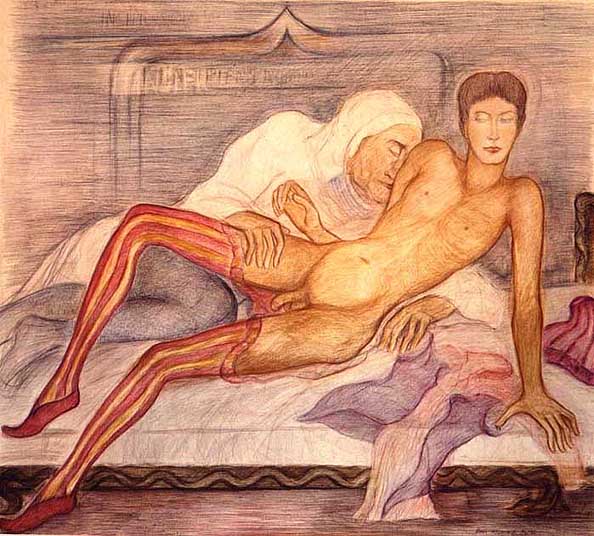
Today I would like to celebrate the art of Pierre Klossowski - thinker, writer, artist, and French translator of Heidegger, Wittgenstein and Nietzsche.

Above: Scene with the young Ogier and the Commander of St. Vit, 1982.
Below left: Lahire and the young Ogier, 1972. Below right: Le petit Rose.

Monday, March 06, 2006

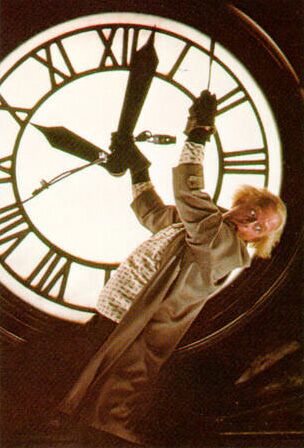
Back to the Future


Axel and I were watching the German possible-worlds scenario film Run Lola, Run when we got to thinking about time-travel. Naturally, our discussion required that we accept a common sense, spatialized conception of time, if only to give the screenplay writers a fighting chance; reading Bergson and listening to Elusive-Hyphen's diatribes against "Hollywood's obsession with time-travel" made this fairly difficult.
Axel's opening view was that, if we accept a strong determinism, then it is not inconceivable that our irruption into the causal chain, when we go back in time, is always already part of the 'causal account'. That is to say, our actions as a time-traveller in 1975 would be determined, but determined by states of affairs in 2006.
I objected by saying that, given our assumptions (ie, our commonsensical, simple-science fatalism), a problem arises because, from these very assumptions, it follows that the state of affairs in the world at any moment is determined by that of the prior moment. And since on our simple model time unfolds in a 'straight-line', we encounter the same difficulty as Kant did on the question of free will: how does anyone, or anything, intervene in the causal chain, since causal determinism is true a priori (or in our case, by definition)?
To clarify - my problem with time-travel has to do with the magical appearance, in the causal order, of undetermined events, even though we know that they are determined by events in the future. To accept this outlook, we must adopt the view that all of history is simultaneous. The problem now is that our claim that 'every state of affairs is caused by the state of affairs immediately prior' loses all meaning, since we have no way in which to grasp such a temporal understanding of causality.

Our concerns developed from thinking about what would happen if you travelled back in time and murdered the 'young you'. Would the later 'you' simply evaporate? Would you find it impossible to kill the 'younger you'? These are pressing questions. But I think it is high time I recommend taking a look at Bergson ('how is forgetting possible?').

The shoe store

Listening to a lecture on Franz Kafka, I drifted off into reminiscences of the time I spent working in a shoe store. There were some characters: the second generation Pole whose only remaining outward signs of polishness were his blonde hair, and much-parodied tendency to pronounce 'a' like a 'u', as in 'Buttersea Bomber!' (his oft-repeated refrain).
Our assistant manager, part Moroccan, maintained a reassuring serenity, punctuated by moments of anger or jollity. His physique was notable for its slightly bandy legs (such as one might find on a cowboy).

Power/Knowledge

"I believe that anything can be deduced from the general phenomenon of the domination of the bourgeois class. What needs to be done is something quite different. One needs to investigate historically, and beginning from the lowest level, how mechanisms of power have been able to function. In regard to the confinement of the insane, for example, or the repression and interdiction of sexuality, we need to see the manner in which, at the effective level of the family, of the immediate environment, of the cells and most basic units of society, these phenomena of repression or exclusion possessed their instruments and their logic, in response to a certain number of needs. We need to identify the agents responsible for them, their real agents (those which constituted the immediate social entourage, the family, parents, doctors etc.), and not be content to lump them under the formula of a generalised bourgeoisie."
aaaaacontent to lump aajjaaaaMichel Foucault, 'Two Lectures', in Power/Knowledge p100-101.

Wednesday, March 01, 2006

Commentariat

Man, Colonel Chabert had me laughing into my keyboard with this comment:
"The longest threads on this site came from mocking or dissing someone's
favourite tv shows - its got to be the most unacceptable thing you can do. You
can abuse Palestinian militants or feminists or altermondialist actions all you
like, call them fascists working for the Man, but disrespect the television!
That's too far! Moralizing, killjoy...its really remarkable. Yet it's not hard to
find out what every hour we each spend in front of the tv is worth to the
Masters. So the radical refusal of destructive, market greasing activity will be
put off indefinitely, while the radical refusal of constructive action will
remain the default position, as ever...."
Guilty as charged guv: when I do have a tv in the house, I can't resist a bit of 70's film action ('twas Smokey and the Bandit last sunday - diamond).

Colloquium

I've spent the evening at the expense of the philosophy department, in the company of a fairly eminent French thinker (as a clue to his identity, we can say that a dumbass nouveau philosophe might call our man a 'deckhand on the ship of fools').
During his talk, he spoke about Masoch, and how Deleuze, in breaking up the sadist-masochist unity, articulates an account of masochism which is deeply subversive. At dinner, he distinguished himself as uncompromising, yet warm. He returned the wine, and left most of his meat untouched; delicate french tastebuds recoiling from Coventry cuisine.

Unfortunately I was a little too overwhelmed to have anything interesting to say to him. I felt less like an interlocutor and more like an anthropologist (see this rare species! a genuine thinker! what books does he read? what films interest him?)
When I did talk, I expressed an interest in attending a module based on his current research, rather than him regurgitating old Mademoiselle Plateaux material - a remark which seemed to impress him. I, in turn, was impressed when he explained why he teaches in England ('it is a question of deterritorializing...', 'they let me do what I like...') .

Otherwise, there was department gossip, but I refuse to report it here, since I am trying to kick the habit. I have something of an antipathy towards forming a 'continental bloc' - I would rather simply commit a grievous bodily harm offence against the person in question. Of course, my concern is that, once in prison, I will be compared less to causes célèbres Negri and Genet, than to Schlick's mad student murderer...

A project

What would you say if I told you I was (physiologically, rather than psychologically) addicted to a certain substance, even though I have never ingested that substance?

Tuesday, February 28, 2006

Tuesday love

Here are two pieces of music composed by Friedrich Nietzsche. For now, I shall say that I love them insofar as they exist and can be listened to, rather than insofar as they are masterpieces.

The first: "An early Allegretto for piano, on which Nietzsche worked off and on from 1858 until it found its final form during his Leipzig study period. In it, Nietzsche used Beethovenian material, which becomes particularly apparent in the slow passage in the last third, which is reminiscent of the so-called 'Moonlight' sonata. In this recording, you can hear Michael Tannenbaum in a concert at the Evangelical Academy at Hofgeismar, Hessen, which took place there on October 28, 2000" (thanks to Nietzsche and Music).
The recording doesn't sound too good, but we shan't let that bother us.

From the same site, we have another piano piece: Hymnus an die Freundschaft (1874), written for his friend Franz Overbeck. Later he adapted the hymn to be performed with Lou Salomé's poem Prayer to Life.

Monday, February 27, 2006

A caffeine-induced state of mind

Such wonderful feelings I had last night at around three. I was sitting in the living room, Bach Cello Sweets (taste the sad) unfolding in the background, with a small cup of espresso in my belly. I was reading Essai sur les données immédiates de la conscience, and it was going smoothly.
I thought back to Sartre, sitting somewhere in Paris, 82 years ago. His eyes passing over the very same forms that were before me on the page.
I thought, along the lines of Beauvoir's attempt to become a coat by concentrating on it hard enough: 'if you immerse yourself completely in the sentences, dogmat, if you allow the words to fill your consciousness, you could be Sartre!'

Sociality

"You're just saying that cos Elusive-Hyphen was making fun of Heidegger and Wittgenstein in his lecture the other day!"
How not to make friends in philosophy. Luckily, I was talking to Mon and P, so it was more a question of 'how much can I alienate these two lovable lads?'

P is getting in the habit of telling me to "stop taking cues from M," which is becoming(-?)irritating since I don't believe he realises the extent to which my views differ from M's.
Speaking of whom...

M introduced me to a friend of his, who gave me an easy ride until 10pm, then asked "what is your relation to women?" Uh-oh. I am not effusive on this topic at the best of times, let alone around someone I'm trying to impress through an (over)use of thoughtful silences.
She had found me lacking in character, a defect I tried at once to deny and defend. That was foolish.
"I'm not so-and-so, and if I am it is only because of such-and-such," I crumpled.

Friday, February 24, 2006

Small alterations

As you may have noticed, there have been a few changes round here. I hope you enjoy the new look (which may well be tinkered with over the next days).

Thursday, February 23, 2006

Formfilling


What a fun day! I met two of my lecturers to discuss my year-essays. For Dr Ampere, I shall be working on late Lyotard and the sublime, which will involve investigating the Levinas connection. We also discussed next year's modules, and he gave encouraging signs (I naturally get excited when the words 'Foucault', 'philosophy' and 'module' are mentioned in the same breath).
Elusive-Hyphen steered me away from a 'Bergson vs Sartre on freedom' essay, towards a Bergson and Merleau-Ponty comparative work. This is a project to which I am especially looking forward, since I am itching to investigate properly what distinguishes Bergson from phenomenology. Plus I can't wait to carefully and painstakingly describe 'the Image' in all its shimmering beauty.

Wednesday, February 22, 2006

Artists and philosophers

"Through having reached the percept as 'the sacred source,' through having seen Life in the living or the Living in the lived, the novelist or painter returns breathless and with bloodshot eyes. They are athletes - not athletes who train their bodies and cultivate the lived, no matter how many writers have succumbed to the idea of sport as a way of heightening art and life, but bizarre athletes of the 'fasting-artist' type, or the 'great Swimmer' who does not know how to swim. It is not an organic or muscular athleticism but its inorganic double, 'an affective Athleticism,' an athleticism of becoming that reveals only forces that are not its own - 'plastic specter.' In this respect artists are like philosophers. What little health they possess is often too fragile, not because of illnesses or neuroses but because they have seen something in life that is too much for anyone, too much for themselves, and that has put on them the quiet mark of death. But this something is also the source or breath that supports them through the illnesses of the lived (what Nietzsche called health). 'Perhaps one day we will know that there wasn't any art but only medicine.'"
Perhaps one day we will know that perhapsll hlealthFelix and Gilles, What is Philosophy.

Grauniad: corrections and clarifications

"Our obituary of George Psychoundakis declared that his memoir, The Cretan Runner, was translated "with inimical lyricism" by Patrick Leigh Fermor. Inimitable, we meant."

Friday

There was a party on friday night. At Hades and B. It was fun, though I did go around - in a rather higgledy-piggledy fashion - telling everyone why a dose of Nietzsche makes radicalism so much more fun.
Hades and I considered the ways in which the appearance (or name, etc) of a thinker affects the extent to which we open ourselves to their thought. Hades began by saying that he took an instant dislike to David Hume, because he hasn't a nice name. We agreed on the need to complicate this, since A.N. Whitehead has possibly the ugliest name in philosophy, and yet his late works make him seem marginally interesting, enigmatic, and cutting-edge.
I put forward that old favourite of mine: that it is possible to gather a lot about someone not by their looks but by their countenance, their bearing, their facial expressions, the way in which they hold themselves, and the 'look' on their hands. This view was bolstered, I thought, by an interview - which I saw last week - with Francis Bacon. Up 'til that point, I had only ever seen still photographs of him (ok, and self-portraits, but that is another matter). Frankly, his face repulsed me, in an astonishingly powerful way. Yet when I got to see it animated, talking, quaffing red tea, I fell in love with that face.

Tuesday, February 21, 2006

Tuesday Love

Isn't it marvellous that the study of philosophy allows room for quaint anecdotes about doddering old men? Dr Ampere regaled the class with tales of his neighbour, "who must be about ninety," going for his daily walk with the regularity of a metronome and the grace of a gnome. What's more, this wasn't just to pass the time, but served to illustrate Deleuze's Bacon.

I also love the ineptitude of The Times hatchet job on P.F. Strawson and analytic philosophy. Two wrongs don't make a right - newspapers pissing on Strawson's grave is not going to make forgetting the Derrida obituary fiasco any easier.

Friday, February 17, 2006

Come on baby, do the locomotion


I was cycling onto campus this morning, when I saw a man with a camera standing on the footbridge which crosses the railway line. A real live trainspotter! What a treat. I observed him closely as the time came. The eye of the duck, we might call it.
Along the track, I saw an unusual looking engine approach. Ah. Our anorak raised his camera, poised to strike. At this very moment (Richard Branson bless his heart) a Virgin Trains express hurtled past, completely blocking any view of the old locomotive. To his credit, the trainspotter remained calm, looking deadpan.

Thursday, February 16, 2006

Wednesday, February 15, 2006

Attack of the Killer Bees


I found this strange 'game' - it involves directing a swarm of bees around a badly characterised cityscape. Endless hours of joy. Here.

Tuesday, February 14, 2006

Dogmat strays

I have been asked to contribute to a collective blog. 'An honour', I said. Now, those of you familiar with what I write here will not be unjustified in thinking "what the fuck, dogmat?"

"What the fuck" indeed. Seeing as the blog to which I shall be contributing draws some inspiration from Deleuze and Guattari, this might be confusing. I do not wish to go over what I have already said regarding these thinkers and the reading of them, here and here. Rather, I shall say that I hope to be involving myself in something unusual and interesting, and possibly even exciting.

Taking the brim_Took the broom is described thus:

"this group space of appreciation polemic_is Cabaret__positive interested___calL it enthusiasm_ poems, images, collage,audio theory of poems, Pop discourse of the same, lines of thought, a space_one desire-machine crossing the plane, crissing the other,plugging in,the transversality of verse, the metanoia of gloss and revision. 'Work' is defined as text,image either complete or in 'progress'__ Things mutate, everything transforms, metamorphosis."

Tuesday Love: cancelled due to foreseen circumstances

How can I talk about yes-saying on February 14. Millions of hearfelt words emanating from grotesque minds. No. Today, for one day only, I become a Nay-sayer.

Monday, February 13, 2006

It is a question of perspective

"He, I now reflected, [...] had always preferred the right-hand of the two salons at Sacher's café, as he would time and again maintain, because of the more comfortable chairs but primarily because of the much better paintings hanging there, I myself, because of the foreign newspapers, mainly the English and French papers, available there and also because of the much better atmosphere, actually preferred the left-hand one, and so we had, whenever I was in Vienna, whenever we went to Sacher's, and we liked going to Sacher's more than anything else, gone alternately to the left-hand and to the right-hand salon of Sacher's café, which in fact was better for our speculations than any other place, and hence the ideal one."
xcxxxxxxxplace,xxvvxxxxxxxxxxxxxThomas Bernhard, Wittgenstein's Nephew p97.

Friday, February 10, 2006

You're mad you are


A lethal cocktail of aspirin and vitamin C has induced in me a reckless mischievousness. I've been going around altering philosophy department announcements which should say "Nozick's attempt to solve the prisoner's dilemma" so that they read "Putznam's attempt..."
I took great effort to copy the handwriting, so it looks authentic. Now, I admit this jolly japery is a little bit 'culturally exclusive' (Seinfeld has been off the air for almost eight years you schmuck) but still, you don't have to be a New Yawk Jew to get the drift.
One day this kinda shit'll get me sectioned under the mental health act if I don't look out.

"Do you know what day it is, son?"
"Mus be 23 November 1963, sir. I remember clear cos I saw the newscast say President Kennedy got shot."

The corporate demon has climbed between the pages of my beloved books

I have been culling my books. Moving into a different room, I decided to cut my collection down to size. But it hasn’t been an easy process – I feel as if a small part of me has been lost forever.
Let me not get carried away. More importantly, we might wonder: ‘which part has been lost?’

Have you seen the latest fire hazard adverts? They feature the tagline: “You don’t have to die to lose your life,” accompanied by pictures of burnt sofas. Long gone are the days when vagabonds would stand in the street shouting “I’ve got my health and that’s all that matters!” Nope – nowadays you are your possessions. Throw my CD player away, and my soul is diminished. What happens if I get rid of all my possessions? Do I die? No. I die if I stop eating or drinking (but that is another matter: we all know what happens if you eat too much).

What has been lost in my book cull is a part of my consumer-self. Schopenhauer was right when he said that “the appropriation of a book is often mistaken for an appropriation of its contents.”

Tuesday, February 07, 2006

Tuesday Love


I love the way it feels a few minutes after taking painkillers. When I am sick - as I am now - they make me feel warm and contented. In fact, the sensation is washing over me at this very moment. Ah.

Monday, February 06, 2006

The weekend

I've just returned from a weekend away with the philosophy department. We stayed in a nice place in the countryside, and listened to papers in between eating and going for walks. On the first evening, I gave a short talk (students are encouraged to introduce and discuss a topic that they are interested in) about Bataille's economics. I presented Derrida's challenge - 'the gift is impossible' - and then tried to bring everything back together through the distinction between general and restricted economy. I attempted to explore the possibility of transposing aspects of one type of restricted economy (say, one based on potlatch) onto another type of economy - in our case, capitalist economy based on acquisition and accumulation. My conclusion? That the gift event and the theft event have the same potential for disrupting contempary modes of exchange. It was good fun, especially since I made sure to give an analysis of Bataille's apothegm: "the sexual act is in time what the tiger is in space."

As you can imagine, the primarily analytic audience just loved it.

Matches, in his talk, wondered why we don't all want to be short-sighted, two-dimensional egoists, if that means we get to be liked and have lots of money and possessions. Hmmm, that's something for all of us to think about. While waiting to transfer onto that MBA course.
On the final day, Mon introduced Tarkovsky's Mirror, which we subsequently watched. I thought it marvellous, but I definitely need to see it another two or three times. True to form, Matches was puzzled: "what was that all about?" Sigh.

Wednesday, February 01, 2006

"A certain evolution of wealth, whose symptoms indicates sickness and exhaustion, leads to shame in oneself accompanied by petty hypocrisy. Everything that was generous, orgiastic, and excessive has disappeared; the themes of rivalry upon which individual activity still depends develop in obscurity, and are as shameful as belching. The representatives of the bourgeoisie have adopted an effaced manner; wealth is now displayed behind closed doors, in accordance with depressing and boring conventions. In addition, people in the middle class - employees and small shopkeepers - having attained mediocre or minute fortunes, have managed to debase and subdivide ostentatious expenditure, of which nothing remains but vain efforts tied to tiresome rancor.
Such trickery has become the principle reason for living, working, and suffering for those who lack the courage to condemn this moldy society to revolutionary destruction."

having attaimmed Georges Bataille, 'The Notion of Expenditure' in Visions of Excess p124.

Dogmat on the slide...

Tuesday, January 31, 2006

Potlatch: today's tuesday love


"On July 7, 1883, Governor General Lorne (1845-1914) approved an order-in-council recommending the suppression of the potlatch custom practiced by the Native peoples of the northwest coast of British Columbia. Two years later, the potlatch was declared illegal, and the prohibition remained in force until 1951. The custom at issue involved an elaborate demonstration of social status through dance, oratory and the distribution of gifts. As the 1883 order-in-council by Sir John A. Macdonald (1815-1891) records, Indian agents and Christian missionaries equated the custom with a range of vices. However, the objection was ultimately rooted in the Euro-Canadian notion of cultural progress, which opposed the uninhibited distribution of material wealth. Macdonald accepted the view that, 'It is not possible that Indians can acquire property or can become industrious with any good result while under the influence of this mania'..." (at least the Canadians tell it like it was)

Friday, January 27, 2006

Tuesday, January 24, 2006

Tuesday Love

I've been thinking. Three weeks after I made my new year's resolution, and already I'm mudslinging. Come on!
If they are worth anything, those pseudo-deleuzians I have been wailing about will, in their 'loneliest loneliness', suffer unspeakable torments of conscience. What should I care? If they try to thrust themselves upon me, I will turn away.
Maybe I haven't the right to point fingers, maybe I have. Maybe I don't really know who I'm pointing fingers at or why. One thing is certain: I have forgotten that I don't want to be a finger-pointer at all.

So today I wish to begin an occasional feature (a foil to The Weblog's Tuesday Hatred); to help remind myself of the things in life that I - we - mustn't neglect to celebrate.

For now, two things: 1) Gilles Deleuze's beautiful panegyric to his maître, Jean-Paul Sartre:

"To what is Sartre faithful? Ever and always to the friend
Pierre-who-is-never-there. It is his peculiar destiny to circulate pure air when
he speaks, even if this pure air, the air of absences, is difficult to breathe."
in Desert Islands p80.
Read it. Read it? Reread it.

2) Erik Satie's piano works. It is truly the most beautiful music I have ever heard.

Satie has inspired many artists, including Jean Cocteau and Pablo Picasso. I hope that presenting a few examples of this will add to the general exuberance of the post.

Friday, January 20, 2006

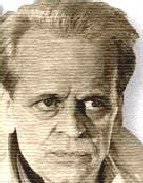
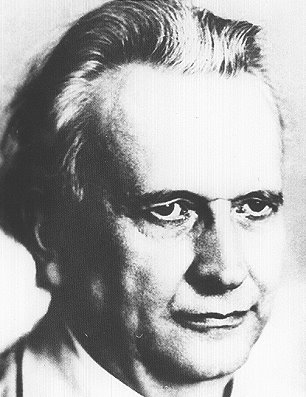
Lookalike: Klaus Kinski and Karl Jaspers

Two great men: one a "sex-crazed maniac", the other a well-loved actor.

Thursday, January 19, 2006

Joseph Beuys in America


"With methods meant to seize the ready-made, it [science] cannot in general enter into what is being done, it cannot follow the moving reality, adopt the becoming which is the life of things. This last task belongs to philosophy. While the scientist [...] is obliged to use craft with nature, to adopt toward it the wary attitude of an adversary, the philosopher treats nature as a comrade. The rule of science is one posited by Bacon: obey in order to command. The philosopher neither obeys nor commands; he seeks to be at one with nature." Henri Bergson, Creative Mind p126.

Tuesday, January 17, 2006

The Book of Pleasures

Last night, over the course of four hours continuous reading, I discovered Raoul Vaneigem:

"Sabotage, absenteeism, voluntary unemployment, riots, wildcat strikes, stealing for fun and doing things for the hell of it - the axe is laid to the commercial tree and I'm delighted. As sure as work kills pleasure, pleasure kills work. If you are not resigned to dying of disgust, then you will be happy enough to rid your life of the odious need to work, to give orders (and obey them), to lose and to win, to keep up appearances, and to judge and be judged.”
The Book of Pleasures, p20.

"To drink, insatiably thirsty, at the 'cup of life' is the best guarantee of its never running dry. Children know it - they take everything as if it were an unlooked-for present. Lively senses make their world live, long before the economic imperative starts totting the bills run up by life; before they learn about reciprocity; before they set out to deserve their presents, demand their due, be rewarded for winning, or punished for a depreciation, or thank those who remove one by one the charms of an existence without opposition." Ibid. p38.

"Women have long shared with artists, children and madmen the privilege of shrieking, singing, weeping, throwing their arms about, offering any old thing in gift, and betraying what is usually kept quiet. Since industrialisation won them the priceless right to work in a factory, gain a wage, run a business and command an airborne division - while artists became civil servants and promoted culture - only children and the so-called mentally ill are left to give confused expression to the convolutions of language prised from the grip of trade." Ibid. p48.

"If someone strikes me on my left cheek, I will smack him in the teeth sooner than offer him my right. Is not my enemy whoever constrains me, threatens me or makes me feel guilty? I want to live what I specifically am, without norms and without always watching for someone waiting for me at the corner of the street. If I kill what represses me, it will be inadvertantly, as I stride out happily, without looking back." Ibid. p65

"Nothing is passionately interesting if you are counting the pennies or feel forced to do it. Only desire teaches us to live. You hear people all to often weigh their words and pause for you to admire profundity. Desire, on the other hand, leaves everyone to work out his own way in silence." Ibid. p92.

Monday, January 16, 2006

More mischievous troublemaking


"Foucault said once that with Deleuze philosophy became theatre. Well, with the English Deleuzeans it becomes circus. Philosophy for clowns."
So M.arc opens the comments to my previous post. Golly, dogmat has never seen so much activity!
Clowns, eh? Those sad, determined faces. There is no lightness, no real joy to be found in the circus - a heavy, frightening place filled with jeering laughter.

"...hope it is not going to go Nick Landish again…" whistles the anonymous Jean X, (the cadence of the passage suggests a certain regular commentator). Nope, I don't think it will. Nick Land and his 'movement' seem, with bleary hindsight, to have been able to laugh at themselves. With the new "Deleuzean mafias" (such a snappy catch-all phrase: thanks, Marc), I'm not sure fun poking is permitted.

Often I find myself fielding questions about whether I shall be taking part in this or that reading group or seminar. I tell my friends, "I am not interested in becoming a Deleuzian along with everyone else. I want to engage with him seriously when I am ready; and I am not ready." Their eyes cloud over with suspicion and concern. Someone brandishes a text at me, another lays a threatening/forgiving hand on my shoulder. Do I want my academic career to sleep with the fishes?

Friday, January 13, 2006

Rebels D&G: now the fashionable orthodoxy?

I'm talking about Deleuze and Guattari™

I was sitting peacefully in Raffles yesterday, reading Wittgenstein's Nephew (Thomas Bernhard), when two people sat down next to me. Mr O started to talk. His voice could only be described as the voice of someone who knows.
"Thousand Plateaus is a work of...[inaudible]...,"
He then tried to address his interlocutor's concern about the contents page:
"...transversality of concepts, you see..."
The hapless student tried to drag the discussion on to familiar territory - a novel he'd lately read involving 'virtual-something'. Big mistake, friend.
Mr O swept aside this impoverishment with a short speech about the difference between the possible and the virtual (I hope this is right - I am writing from memory, and my shameful ignorance isn't helping.)
The momentum built up during three minutes of continuous talking made him almost unstoppable:
"...Deleuze and Guattari™ are only interested in the aesthetics of composition..."
He didn't say "...my dear boy," but he could have.

Mr O has adopted the attitude of the expert. He has reached that point in his intellectual development where he is permitted to drop the hesitancy, and the tentative sounding remarks. He stops thinking for himself, but now has a duty to think for others. His role is pedagogical.
I took an immediate dislike to him.

Tuesday, January 10, 2006

The malady of the yes-sayer

A friend is ill. I am back in damp dark dank midlands. I don't feel like posting anything. "Looking away shall be my only negation."

Monday, January 09, 2006

Saturday, January 07, 2006

Thursday, January 05, 2006

Is this a meme?

1. What did you do in 2005 that you'd never done before?
I began to write (essays, blog, etc) more regularly.

2. Did you keep your new years' resolutions, and will you make more for next year?
My new new year's resolution is below. I should also say that I don't want to put anything more on this blog about academic philosophy politics in 2006. I am not a gossip columnist.
I didn't have any resolutions last year.

3. Did anyone close to you give birth? No.

4. Did anyone close to you die? No.

5. What countries did you visit? Sweden and South Africa.

6. What would you like to have in 2006 that you lacked in 2005? Excitement about returning to London to earn a living.

7. What date from 2005 will remain etched upon your memory, and why? None in particular.

8. What was your biggest achievement of the year? There wasn't any single achievement. I did one or two things which I am reasonably pleased about.

9. What was your biggest failure? Not working as hard at philosophy as I know I should've.

10. Did you suffer illness or injury? No.

11. What was the best thing you bought?
A book - probably Kant's Critique of Pure Reason. It was whilst reading this that I felt for the first time that I was being serious about thinking.

12. Whose behavior merited celebration? My brother's. He returned to school this year.

13. Whose behavior made you appalled and depressed? Ha! There are so many names.

14. Where did most of your money go? Coffee and fish-fingers.

15. What did you get really, really, really excited about? Kant, Merleau-Ponty, Nietzsche, and (obviously, I hope) in a different way, New Orleans.

16. What song will always remind you of 2005? Bob Dylan's Maggie's Farm, just cos my Dad and my little sister got hooked on it over the holidays.

17. Compared to this time last year, I am... less interested in taking my own life.

18. What do you wish you'd done more of? I wish I'd tried a little harder to connect with people, especially strangers.

19. What do you wish you'd done less of? I could have done with less fatuous grumbling.

20. How will you be spending Christmas? With family in a town in the middle of South Africa, eating lebanese food.

21. Did you fall in love in 2005? I couldn't say.

22. How many one-night stands? Hmm, let's just say that my mind (and my body) doesn't function in a way that is conducive to drunken sex with strangers.

23. What was your favorite TV program? I was introduced to Arrested Development by my housemate Axel.

24. Do you hate anyone now that you didn't hate this time last year? Not really. Hatred, for me, is a fleeting emotion.

25. What was the best book you read? Tough. Two books which really opened up my thinking were Henri Lefebvre's Rhythmanalysis and Nietzsche's Gay Science. Another marvel was Thomas Bernhard's Concrete, which M recommended me.

26. What was your greatest musical discovery? There were quite a few. Jimi Hendrix and Bob Dylan, so far as pop music goes. Charlie Chaplin's compositions, which provide the soundtracks to his films, were a treat (the music for The Circus - what beauty!). Plus 'live' classical music; something which I have never really enjoyed before.

27. What did you want and get? An education.

28. What did you want and not get? An education.

29. What was your favorite film of this year? I've not seen many new releases. The best film I saw for the first time was possibly Renoir's La Regle du Jeu.

30. What did you do on your birthday, and how old were you?
I spent the time with my mother in London, I think.

32.What one thing would have made your year immeasurably more satisfying? More reading.

33. How would you describe your personal fashion concept in 2005? Second-hand (including shoes, excluding underthings). Style never goes out of fashion and all that...

34. What kept you sane? Talking to close friends.

35. Which celebrity/public figure did you fancy the most? I found Judith Butler more than a little attractive. And then there was Alcibiades, in Plato's Symposium.

36. What political issue stirred you the most? I surprised to find that my warped weltanschauung was given credence by the events in New Orleans and Iraq.

37. Who did you miss? Various family members. My colleagues from the last job I had before taking up philosophy study full-time.

38. Who was the best new person you met? Brn.

39. Tell us a valuable life lesson you learned in 2005. Fuck that for a game of eggy soldiers.

With gracious thanks to Fort Kant.