Sunday, September 17, 2006

I remember. But there is no past.


Why the anguish when hearing of past romantic episodes - however insignificant - of those with whom one is intimate? There appears to occur an overlooking of the time that separates prior adventures from the present circumstance. What is the nature of this overlooking?

When I drink something, I can be enveloped in either a sort of joy, or in a reminiscing sadness. This sadness is precisely an awareness of the ('objective') time which separates me from better moments. But if, on the contrary, I am transformed into a joyous state, two distinct transportations take place. There is a kind of 'dissolution of the subject' whereby the pleasure - the 'good times' - of a stranger can be my pleasure too. There is also an elimination of temporal gaps, such that past pleasures can bring me present enjoyment.
These two effects are very different. When a memory is recalled, it is 'made present' again (which of course leaves sad reminiscing unexplained, but I shall pass over this difficulty). It seems clear, given a certain conception of memory, that the overlooking of temporal distance can be understood fairly simply. We are, to a certain extent, our past. Our past is made present at every moment. Our actions express the past; our recollections are made present in their very recollection.

So to return to our original question - why is this overlooking problematic and painful? Perhaps we are seeking the source of the anguish in the wrong place; perhaps it is not the temporal aspect of the romantic event, but the spatial aspect (ie, that it doesn't involve me) which troubles. I find it quite fascinating that in certain moods I can exult in the mere appearance on earth of moments of reciprocal pleasure, even if they are far removed from my situation. This I cannot explain. But I think we can correlate this attitude, and its opposite - the wish to deny the pleasure of others - with what can broadly be described as active and reactive forces.

It is becoming aware of the independence of the other which stimulates the reactive forces (in our case). Recognising that one is vulnerable in the face of the other, that one is subject to the - possibly - whimsical fancies of another person, causes an agitation of the reactive forces, since from this recognition follows a denial of the false strength which is the pinnacle of reactivity.

Sunday, August 06, 2006

Raj and Brick Lane

When I worked in a London shoe store, I had a colleague named Raj. He was from Bangladesh, here working two jobs in order to send something back each month (needless to say, they were both poorly paid). Raj provided me with an interesting insight into the way things really work 'on the other side'. He was not a devout Muslim, but he did try to live life in conformity with the Islam of his home and community. He was a tragic figure.
He relation to women was fraught. Ramadan was a particularly problematic time. I fondly recall his shop-floor erections, and his not-too-surreptitious taking-cover behind the till. As devoted Westerners, his co-workers took great pains to draw his attention to attractive or scantily-clad women during this holy month. In his turn, he hesitantly embraced the crude and suggestive language of a London lad.
One day, we discovered that during his last holiday home, he had been married. Finally the time arrived when his wife came to England to live with him. We were fascinated: what could this small, faintly comical man make of married life? The following day, he was at work looking unwell.
"Did your wife arrive safely, Raj?" we enquired.
"I bought her MacDonalds for dinner. She threw it in the bin. And cried."

Raj struggled to reconcile worthless Western ways of living with the - to us - unsettling traditions of his home. The MacDonalds episode only gives us a very small taste (!) of this 'clash of cultures', but it also provides us with an opportunity to consider the multifarious cultural forces which push and pull at immigrants in Britain. He was clearly willing to accept certain ways of thinking which are considered 'British', though these are (also) repugnant. How can we expect someone who is living near the bottom of society to be moved by such ugly culture? It is not a question of 'Mill or Mohammed', but of 'capitalist slavery or patriarchal religious slavery'.

How does this relate to the Brick Lane episode? All those who wail about freedom of speech believe this choice is between Mill and Mohammed. Of course, those people who protest against the filming present themselves as petty and small-minded. In my view (naturally) the appropriate response would be for those Muslim men - and women - who feel attacked to stand proud and say: "Look at yourselves. You want me to abandon my culture for this noxious spectacle you call civilization?"

Wednesday, July 26, 2006

Israeli blitzkrieg


I feel a sense of irony - can anyone else feel it?

Monday, July 24, 2006

Intelligence as metaphysics

"The administration used intelligence not to inform decision-making, but to justify a decision already made," Paul Pillar, the CIA's senior Middle Eastern analyst from 2000 to 2005, argued recently.

Tuesday, July 11, 2006

Dogmat gets his dream job


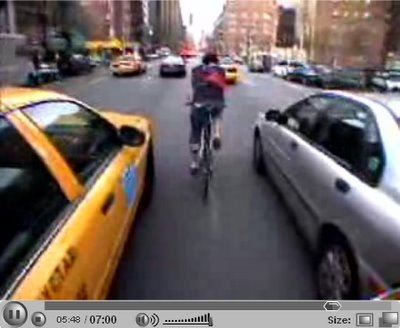
I have been employed as a bicycle messenger. This is very exciting, since it was my childhood fantasy to be paid to ride my bike (ok, this is not the Tour de France, but let us leave those small details aside).
The bad news is that, apparently, many couriers are on heroin. The good news is that the last London courier to die 'in the line of duty' was back in 2004.
My training is this afternoon, and I should start tomorrow.

Friday, July 07, 2006

One year on

The information superhighway's slowest vehicle has been trundling along for a year now. Allez dogmat, allez!
Blossoming in the aftermath of horror, like poppies in the trenches, dogmat has endured a whole year of shaky consumer confidence and uncertain futures markets. Bravo!

Thursday, July 06, 2006

"the Consul needed a drink..."

There is a pub two doors down from where I am staying, which I ventured into yesterday. A proper Irish place, promoting not live World Cup but live Gaelic football. The barman strolls over to me: "What tickles your fancy?"
This question was made all the more funny by the lad's scruffy countenance and three day old shiner. I began to imagine a bare-knuckle boxing match, horses milling about in the background...though he probably got it in a karate class, or being mugged (is nothing sacred anymore?)

I settled down to try to read Nietzsche and Philosophy over the blaring folk music. It wasn't difficult.

Tuesday, July 04, 2006

Retrato de Oscar Morineau, 1936 (Diego Rivera)

What on earth has dogmat been up to?

I have arrived in London. Before coming here, I spent my final weeks in Coventry mostly in a pleasant 'pub' on campus, drinking, smoking and talking 'philosophy' with other students too jaded to want to do anything else. I was re-acquainted with Tome, discussing Bergson and the thing in itself. I also spent time with Favela, who reawoke my interest in Neil Young (and other things which I don't care to mention).
Yes, it is true, I got my results, but they were poor, very poor, except for the dissertation on perception which stumbled into a fair mark. On the plus side, Axel outdid himself - and everyone else - proving that 'marijuana and David Lynch' is not a recipe for disaster after all.

I put my nose around the door of Tate Modern the other day, but I only looked at the Francis Bacon, whose paintings I have never seen - dare I say it? - 'in the flesh' before. I have made the embankment my new home, sitting around with my flask of coffee, reading Lowry's Under the Volcano, and dreaming of ice cold cerveza.
I've not been reading much lately, though I did delight in consuming a book called - mysteriously - La vie sexuelle d'Emmanuel Kant, written by a mysterious man named Jean-Baptiste Botul, and recommended to me by M, who was introduced to this marvellous thinker by one of his mysterious co-conspirators.

Thursday, June 29, 2006

Storm out of season

"He watched the clouds: dark swift horses surging up the sky. A black storm breaking out of its season! That was what love was like, he thought; love which came too late [...] It slaked no thirst to say what love was like which came too late."

Malcolm Lowry, Under the Volcano p16.

Thursday, June 15, 2006

Mind-brain identity

Axel, and others, have been revising for their 'philosophy of mind' exam. They've been revising Davidson, and others. They have been discussing mind-brain identity theories.
I think I have discovered why those theories are rubbish. They assume what they set out to prove; they beg the question. The brain is in the head, and it is the process or events of the brain which we are seeking to identify with feelings, perceptions and such of the mind.
Where is the mind? The preliminary considerations of identity theorists always already locate the mind in the region of the head. The mind is not self-evidently in the head, since that is one of the things identity theorists are attempting to demonstrate. So if we lose this absurd assumption (absurd, given what they are trying to prove), there are two obvious difficulties: 1) when I plunge a hypodermic needle into my heroin-hungry arm, the 'pricking pain' of the needle is felt, if anywhere, in the arm. It is very certainly not in the head. If you knee-cap someone, then ask them where it hurts, the answer would be an incredulous "in my knee you fucking psychopath."
2) Not all mental 'events' are like this though. Anguish, for example, could not be said to be anywhere: it is non-material, governed only by our temporal inner sense.
So certain feelings can be felt around the body, and others are no more in the head than on Pluto. I struggle to see what kind of identity could hold between these so located mental events and a physical event in the brain.

Monday, June 05, 2006

Heidegger on Art


"From the dark opening of the worn insides of the shoes the toil-some tread of the worker stares forth. In the stiffly rugged heaviness of the shoes there is the accumulated tenacity of her slow trudge through the far-spreading and ever-uniform furrows of the field swept by a raw wind. On the leather lie the dampness and richness of the soil. Under the soles stretches the loneliness of the field-path as evening falls. In the shoes vibrates the silent call of the earth, its quiet gift of the ripening grain and its unexplained self-refusal in the fallow desolation of the wintry field. This equipment is pervaded by uncomplaining worry as to the certainty of bread, the wordless joy of having once more withstood want, the trembling before the impending childbed and shivering at the surrounding menace of death."
—Martin Heidegger, The Origin of the Work of Art .

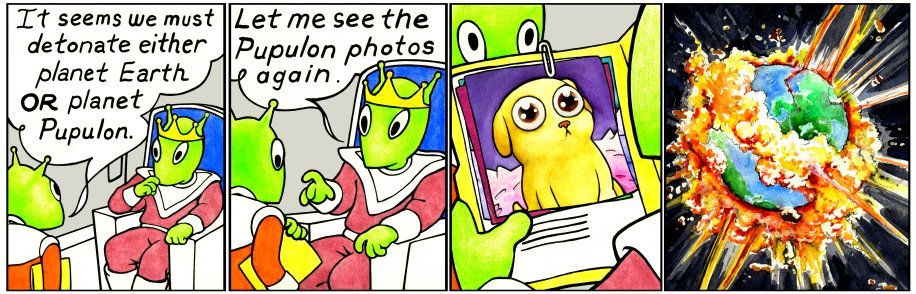
Judgement Day: not quite how we imagined it...


From this marvellous site of cartoons (thanks Axel).

Friday, June 02, 2006

A machinic portrait of dogmat


A) The grounding.
B) The ground.
C) Thought is de-grounded as it passes through the ground at (B), and emerges from the spout at (C). 'Percolation' introduces time into the schema. Not only does thought pass upwards through space, but it matures in the temporal process of percolation. The temporal is also where we find the sexual. As percolation - the 'ejaculation of thought' - comes to an end, the system produces an epiphenomenon, which is consciousness in the form of steam. Completion of the process is indicated by the crescendo of sounds emitted; Bergsonians should be interested to note how intimitely linked are the steam of consciousness and the 'music of the system'.

Wednesday, May 31, 2006

Mug

Q: What is the most exotic coffee you've ever sipped and where?
A: I once had an espresso in Brazil where the beans had been hand-picked by monkeys on a hard-to-access mountain top.

—BOBBY HASHEMI, my former employer and Coffee Republic founder.

Live long and prosper

Some Labour MP wrote an article in the paper about the wonders of free-market economics. She was waxing lyrical about how "the operation of markets is a peaceful way of facilitating revolution whereby outsiders are allowed in, vested interests are challenged and the old is replaced by the new."
Yes! All is tickety-boo when market forces are in control.
"Globalisation is not a threat, but an opportunity, and we should embrace it and see liberal markets as the most effective instrument for generating prosperity."
Yes! All those nasty aristocrats will lose their privileges, their stately homes etc. Instead we'll see a veritable thunderstorm of trickle-down wealth; meritocracy will prevail. Hurrah! Then the privileged will be those who have earned it. But 'earning it' requires a bit more than mere hard graft. You need money to begin with, to get the virtuous circle turning. Money 'lends itself' to the creation of wealth - but what happens if you are penniless to begin with? You've got a problem.

Not really. You see, now it appears as if the successful in a meritocracy have earned their success, rather than simply been born with it. Yet one question remains: what makes 'earned' success more legitimate than inherited wealth (or stolen wealth, for that matter). What kind of wacky protestant work ethic are we tangled up with here? Answers on a postcard, please.

Tuesday, May 30, 2006

It's so good to laugh again

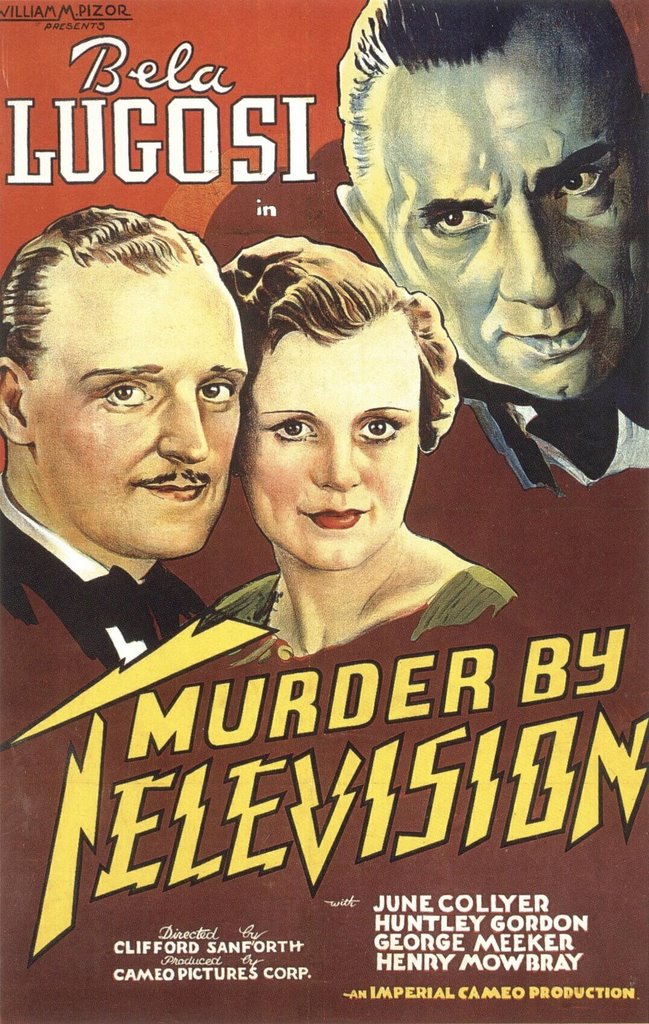
Television or the drink?

Television has the unique power of bringing people together. The usual complaint is that a tv dominates the living room. The flip side to this is that it unifies the thought of each viewer, to a remarkable degree. Films can do this, but there is nothing quite like mimicking a line from a tv show, only for your interlocutor to reciprocate, turning the dialogue into a skit.
Of course, if you happen to be reading the same book as another person (apart from Potty Harry, what are the odds...) there is instant rapport. But really, 'what are the odds?'

Saturday, May 27, 2006

Life on Earth


The house has begun to turn into an life-form of it's own. The spiders are returning for the summer, and the beehive/insect park in the chimney is spewing out more and more creatures. Two bees fell out of the fireplace this morning, and a few days ago we had a visit from an inch-and-a-half long European Hornet. In the bathroom, a number of mushrooms have mushroomed in the corners.
I can't understand the contemporary obsession with destroying these various living things. Personally, I am quite proud that the conditions in the house foster life and growth. And the place feels a lot more cosy. It is almost as if our home is itself an organism (here a more astute blogger would invoke Hegel or something about 'flat ontology').

Thursday, May 25, 2006

Public Service Announcement

Good news for all those who study at the Coventry university which is not Coventry University. I have jimmied open an ice-cream fridge in the Arts Centre (first floor, across from the Mead Gallery). Free Haagen-Dazs for everyone!
We shall conduct an experiment of sorts. How many free riders can there be? Is there even a free rider problem here? I welcome anyone who wishes to 'take things too far' and 'spoil it for the rest of us', for example by taking as much as they can carry. The sooner the fridge empties, the better.
For all those who wish to hand me over to the authorities, I provide once again the details of the Serious Organised Crime Agency.
I believe it was Herbert Asquith who once said "I scream, you scream, we all scream for ice-cream!"