Tuesday, February 14, 2006

Dogmat strays

I have been asked to contribute to a collective blog. 'An honour', I said. Now, those of you familiar with what I write here will not be unjustified in thinking "what the fuck, dogmat?"

"What the fuck" indeed. Seeing as the blog to which I shall be contributing draws some inspiration from Deleuze and Guattari, this might be confusing. I do not wish to go over what I have already said regarding these thinkers and the reading of them, here and here. Rather, I shall say that I hope to be involving myself in something unusual and interesting, and possibly even exciting.

Taking the brim_Took the broom is described thus:

"this group space of appreciation polemic_is Cabaret__positive interested___calL it enthusiasm_ poems, images, collage,audio theory of poems, Pop discourse of the same, lines of thought, a space_one desire-machine crossing the plane, crissing the other,plugging in,the transversality of verse, the metanoia of gloss and revision. 'Work' is defined as text,image either complete or in 'progress'__ Things mutate, everything transforms, metamorphosis."

Tuesday Love: cancelled due to foreseen circumstances

How can I talk about yes-saying on February 14. Millions of hearfelt words emanating from grotesque minds. No. Today, for one day only, I become a Nay-sayer.

Monday, February 13, 2006

It is a question of perspective

"He, I now reflected, [...] had always preferred the right-hand of the two salons at Sacher's café, as he would time and again maintain, because of the more comfortable chairs but primarily because of the much better paintings hanging there, I myself, because of the foreign newspapers, mainly the English and French papers, available there and also because of the much better atmosphere, actually preferred the left-hand one, and so we had, whenever I was in Vienna, whenever we went to Sacher's, and we liked going to Sacher's more than anything else, gone alternately to the left-hand and to the right-hand salon of Sacher's café, which in fact was better for our speculations than any other place, and hence the ideal one."
xcxxxxxxxplace,xxvvxxxxxxxxxxxxxThomas Bernhard, Wittgenstein's Nephew p97.

Friday, February 10, 2006

You're mad you are


A lethal cocktail of aspirin and vitamin C has induced in me a reckless mischievousness. I've been going around altering philosophy department announcements which should say "Nozick's attempt to solve the prisoner's dilemma" so that they read "Putznam's attempt..."
I took great effort to copy the handwriting, so it looks authentic. Now, I admit this jolly japery is a little bit 'culturally exclusive' (Seinfeld has been off the air for almost eight years you schmuck) but still, you don't have to be a New Yawk Jew to get the drift.
One day this kinda shit'll get me sectioned under the mental health act if I don't look out.

"Do you know what day it is, son?"
"Mus be 23 November 1963, sir. I remember clear cos I saw the newscast say President Kennedy got shot."

The corporate demon has climbed between the pages of my beloved books

I have been culling my books. Moving into a different room, I decided to cut my collection down to size. But it hasn’t been an easy process – I feel as if a small part of me has been lost forever.
Let me not get carried away. More importantly, we might wonder: ‘which part has been lost?’

Have you seen the latest fire hazard adverts? They feature the tagline: “You don’t have to die to lose your life,” accompanied by pictures of burnt sofas. Long gone are the days when vagabonds would stand in the street shouting “I’ve got my health and that’s all that matters!” Nope – nowadays you are your possessions. Throw my CD player away, and my soul is diminished. What happens if I get rid of all my possessions? Do I die? No. I die if I stop eating or drinking (but that is another matter: we all know what happens if you eat too much).

What has been lost in my book cull is a part of my consumer-self. Schopenhauer was right when he said that “the appropriation of a book is often mistaken for an appropriation of its contents.”

Tuesday, February 07, 2006

Tuesday Love


I love the way it feels a few minutes after taking painkillers. When I am sick - as I am now - they make me feel warm and contented. In fact, the sensation is washing over me at this very moment. Ah.

Monday, February 06, 2006

The weekend

I've just returned from a weekend away with the philosophy department. We stayed in a nice place in the countryside, and listened to papers in between eating and going for walks. On the first evening, I gave a short talk (students are encouraged to introduce and discuss a topic that they are interested in) about Bataille's economics. I presented Derrida's challenge - 'the gift is impossible' - and then tried to bring everything back together through the distinction between general and restricted economy. I attempted to explore the possibility of transposing aspects of one type of restricted economy (say, one based on potlatch) onto another type of economy - in our case, capitalist economy based on acquisition and accumulation. My conclusion? That the gift event and the theft event have the same potential for disrupting contempary modes of exchange. It was good fun, especially since I made sure to give an analysis of Bataille's apothegm: "the sexual act is in time what the tiger is in space."

As you can imagine, the primarily analytic audience just loved it.

Matches, in his talk, wondered why we don't all want to be short-sighted, two-dimensional egoists, if that means we get to be liked and have lots of money and possessions. Hmmm, that's something for all of us to think about. While waiting to transfer onto that MBA course.
On the final day, Mon introduced Tarkovsky's Mirror, which we subsequently watched. I thought it marvellous, but I definitely need to see it another two or three times. True to form, Matches was puzzled: "what was that all about?" Sigh.

Wednesday, February 01, 2006

"A certain evolution of wealth, whose symptoms indicates sickness and exhaustion, leads to shame in oneself accompanied by petty hypocrisy. Everything that was generous, orgiastic, and excessive has disappeared; the themes of rivalry upon which individual activity still depends develop in obscurity, and are as shameful as belching. The representatives of the bourgeoisie have adopted an effaced manner; wealth is now displayed behind closed doors, in accordance with depressing and boring conventions. In addition, people in the middle class - employees and small shopkeepers - having attained mediocre or minute fortunes, have managed to debase and subdivide ostentatious expenditure, of which nothing remains but vain efforts tied to tiresome rancor.
Such trickery has become the principle reason for living, working, and suffering for those who lack the courage to condemn this moldy society to revolutionary destruction."

having attaimmed Georges Bataille, 'The Notion of Expenditure' in Visions of Excess p124.

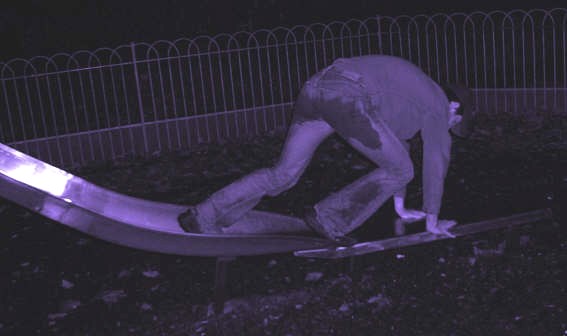
Dogmat on the slide...

Tuesday, January 31, 2006

Potlatch: today's tuesday love


"On July 7, 1883, Governor General Lorne (1845-1914) approved an order-in-council recommending the suppression of the potlatch custom practiced by the Native peoples of the northwest coast of British Columbia. Two years later, the potlatch was declared illegal, and the prohibition remained in force until 1951. The custom at issue involved an elaborate demonstration of social status through dance, oratory and the distribution of gifts. As the 1883 order-in-council by Sir John A. Macdonald (1815-1891) records, Indian agents and Christian missionaries equated the custom with a range of vices. However, the objection was ultimately rooted in the Euro-Canadian notion of cultural progress, which opposed the uninhibited distribution of material wealth. Macdonald accepted the view that, 'It is not possible that Indians can acquire property or can become industrious with any good result while under the influence of this mania'..." (at least the Canadians tell it like it was)

Friday, January 27, 2006

Tuesday, January 24, 2006

Tuesday Love

I've been thinking. Three weeks after I made my new year's resolution, and already I'm mudslinging. Come on!
If they are worth anything, those pseudo-deleuzians I have been wailing about will, in their 'loneliest loneliness', suffer unspeakable torments of conscience. What should I care? If they try to thrust themselves upon me, I will turn away.
Maybe I haven't the right to point fingers, maybe I have. Maybe I don't really know who I'm pointing fingers at or why. One thing is certain: I have forgotten that I don't want to be a finger-pointer at all.

So today I wish to begin an occasional feature (a foil to The Weblog's Tuesday Hatred); to help remind myself of the things in life that I - we - mustn't neglect to celebrate.

For now, two things: 1) Gilles Deleuze's beautiful panegyric to his maître, Jean-Paul Sartre:

"To what is Sartre faithful? Ever and always to the friend
Pierre-who-is-never-there. It is his peculiar destiny to circulate pure air when
he speaks, even if this pure air, the air of absences, is difficult to breathe."
in Desert Islands p80.
Read it. Read it? Reread it.

2) Erik Satie's piano works. It is truly the most beautiful music I have ever heard.

Satie has inspired many artists, including Jean Cocteau and Pablo Picasso. I hope that presenting a few examples of this will add to the general exuberance of the post.

Friday, January 20, 2006

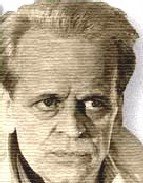
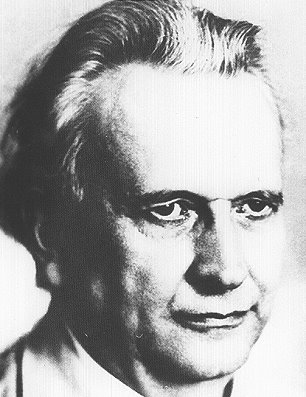
Lookalike: Klaus Kinski and Karl Jaspers

Two great men: one a "sex-crazed maniac", the other a well-loved actor.

Thursday, January 19, 2006

Joseph Beuys in America


"With methods meant to seize the ready-made, it [science] cannot in general enter into what is being done, it cannot follow the moving reality, adopt the becoming which is the life of things. This last task belongs to philosophy. While the scientist [...] is obliged to use craft with nature, to adopt toward it the wary attitude of an adversary, the philosopher treats nature as a comrade. The rule of science is one posited by Bacon: obey in order to command. The philosopher neither obeys nor commands; he seeks to be at one with nature." Henri Bergson, Creative Mind p126.

Tuesday, January 17, 2006

The Book of Pleasures

Last night, over the course of four hours continuous reading, I discovered Raoul Vaneigem:

"Sabotage, absenteeism, voluntary unemployment, riots, wildcat strikes, stealing for fun and doing things for the hell of it - the axe is laid to the commercial tree and I'm delighted. As sure as work kills pleasure, pleasure kills work. If you are not resigned to dying of disgust, then you will be happy enough to rid your life of the odious need to work, to give orders (and obey them), to lose and to win, to keep up appearances, and to judge and be judged.”
The Book of Pleasures, p20.

"To drink, insatiably thirsty, at the 'cup of life' is the best guarantee of its never running dry. Children know it - they take everything as if it were an unlooked-for present. Lively senses make their world live, long before the economic imperative starts totting the bills run up by life; before they learn about reciprocity; before they set out to deserve their presents, demand their due, be rewarded for winning, or punished for a depreciation, or thank those who remove one by one the charms of an existence without opposition." Ibid. p38.

"Women have long shared with artists, children and madmen the privilege of shrieking, singing, weeping, throwing their arms about, offering any old thing in gift, and betraying what is usually kept quiet. Since industrialisation won them the priceless right to work in a factory, gain a wage, run a business and command an airborne division - while artists became civil servants and promoted culture - only children and the so-called mentally ill are left to give confused expression to the convolutions of language prised from the grip of trade." Ibid. p48.

"If someone strikes me on my left cheek, I will smack him in the teeth sooner than offer him my right. Is not my enemy whoever constrains me, threatens me or makes me feel guilty? I want to live what I specifically am, without norms and without always watching for someone waiting for me at the corner of the street. If I kill what represses me, it will be inadvertantly, as I stride out happily, without looking back." Ibid. p65

"Nothing is passionately interesting if you are counting the pennies or feel forced to do it. Only desire teaches us to live. You hear people all to often weigh their words and pause for you to admire profundity. Desire, on the other hand, leaves everyone to work out his own way in silence." Ibid. p92.

Monday, January 16, 2006

More mischievous troublemaking


"Foucault said once that with Deleuze philosophy became theatre. Well, with the English Deleuzeans it becomes circus. Philosophy for clowns."
So M.arc opens the comments to my previous post. Golly, dogmat has never seen so much activity!
Clowns, eh? Those sad, determined faces. There is no lightness, no real joy to be found in the circus - a heavy, frightening place filled with jeering laughter.

"...hope it is not going to go Nick Landish again…" whistles the anonymous Jean X, (the cadence of the passage suggests a certain regular commentator). Nope, I don't think it will. Nick Land and his 'movement' seem, with bleary hindsight, to have been able to laugh at themselves. With the new "Deleuzean mafias" (such a snappy catch-all phrase: thanks, Marc), I'm not sure fun poking is permitted.

Often I find myself fielding questions about whether I shall be taking part in this or that reading group or seminar. I tell my friends, "I am not interested in becoming a Deleuzian along with everyone else. I want to engage with him seriously when I am ready; and I am not ready." Their eyes cloud over with suspicion and concern. Someone brandishes a text at me, another lays a threatening/forgiving hand on my shoulder. Do I want my academic career to sleep with the fishes?

Friday, January 13, 2006

Rebels D&G: now the fashionable orthodoxy?

I'm talking about Deleuze and Guattari™

I was sitting peacefully in Raffles yesterday, reading Wittgenstein's Nephew (Thomas Bernhard), when two people sat down next to me. Mr O started to talk. His voice could only be described as the voice of someone who knows.
"Thousand Plateaus is a work of...[inaudible]...,"
He then tried to address his interlocutor's concern about the contents page:
"...transversality of concepts, you see..."
The hapless student tried to drag the discussion on to familiar territory - a novel he'd lately read involving 'virtual-something'. Big mistake, friend.
Mr O swept aside this impoverishment with a short speech about the difference between the possible and the virtual (I hope this is right - I am writing from memory, and my shameful ignorance isn't helping.)
The momentum built up during three minutes of continuous talking made him almost unstoppable:
"...Deleuze and Guattari™ are only interested in the aesthetics of composition..."
He didn't say "...my dear boy," but he could have.

Mr O has adopted the attitude of the expert. He has reached that point in his intellectual development where he is permitted to drop the hesitancy, and the tentative sounding remarks. He stops thinking for himself, but now has a duty to think for others. His role is pedagogical.
I took an immediate dislike to him.

Tuesday, January 10, 2006

The malady of the yes-sayer

A friend is ill. I am back in damp dark dank midlands. I don't feel like posting anything. "Looking away shall be my only negation."

Monday, January 09, 2006

Saturday, January 07, 2006